Publications

2026

Publications

Shelf Life: Nearshore Movements, Dive Behavior, and Ecotype Status of Satellite‐Tagged Killer Whales in Pacific Mexico

Joshua D. Stewart, Robert L. Pitman, Pamela Martínez-Loustalot, Nicola Ransome, Taylor R. Azizeh, Hiram Rosales Nanduca, Iliana Fonseca, Aldo Alfonso Zavala Jiménez, Jorge Urbán R.

Marine Mammal Science , 42 (2) , e70133

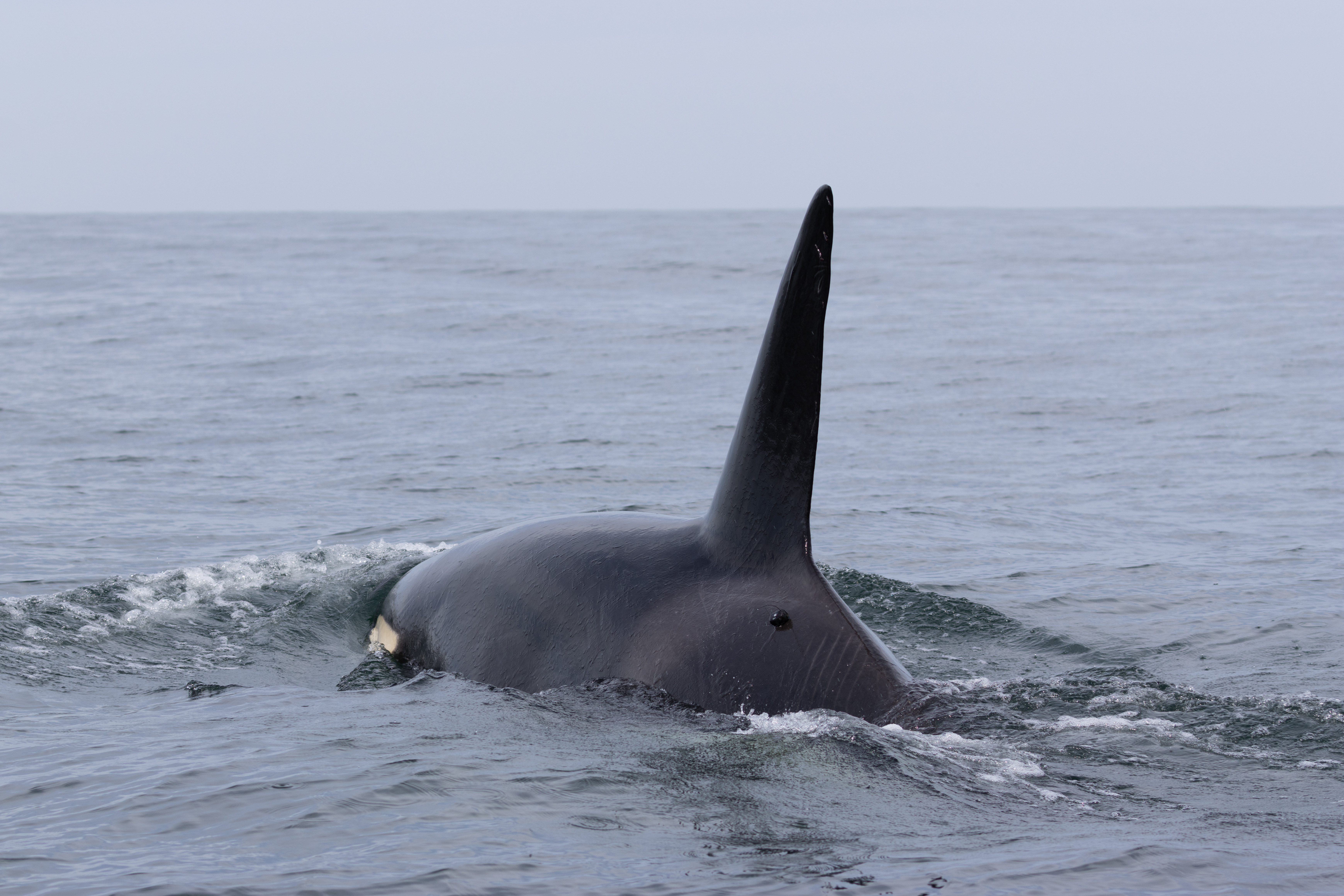
Relatively little is known about the ranging patterns, diving behavior, or prey preferences of killer whales (Orcinus orca) in tropical latitudes. However, they are suspected to be prey-generalists rather than the prey-specialists that are typically found in high latitudes. In February 2025, we satellite-tagged three killer whales from a pod of seven in Bahía de Banderas, Mexico. The tags transmitted for 8–41 days. The tagged whales traveled a total of 4002 km along a narrow, 1000 km stretch of coastline. While tagged, they remained within 50 km of shore 92.5% of the time and in water < 500 m deep 69% of the time, but ranged up to 87 km offshore, to water deeper than 1000 m. Dives were slightly deeper during the day (mean dive depth 44 m) than at night (34.5 m), and they dived deeper (max 528 m) in deeper water. The group was observed attacking/consuming marine mammals, including a humpback whale (Megaptera novaeangliae) calf, a dwarf sperm whale (Kogia sima), common bottlenose (Tursiops truncatus) and spinner (Stenella longirostris) dolphins, and attacking/harassing two species of sea turtles. These data provide the first highresolution records of movements and dive behavior of killer whales in the Eastern Tropical Pacific and support the existence of a unique ecotype in the region.
2025

Publications

Estimating prey capture attempts and activity costs in foraging emperor penguins (Aptenodytes forsteri) using integrated biologging data

Taylor R. Azizeh

San Jose State University - SJSU ScholarWorks

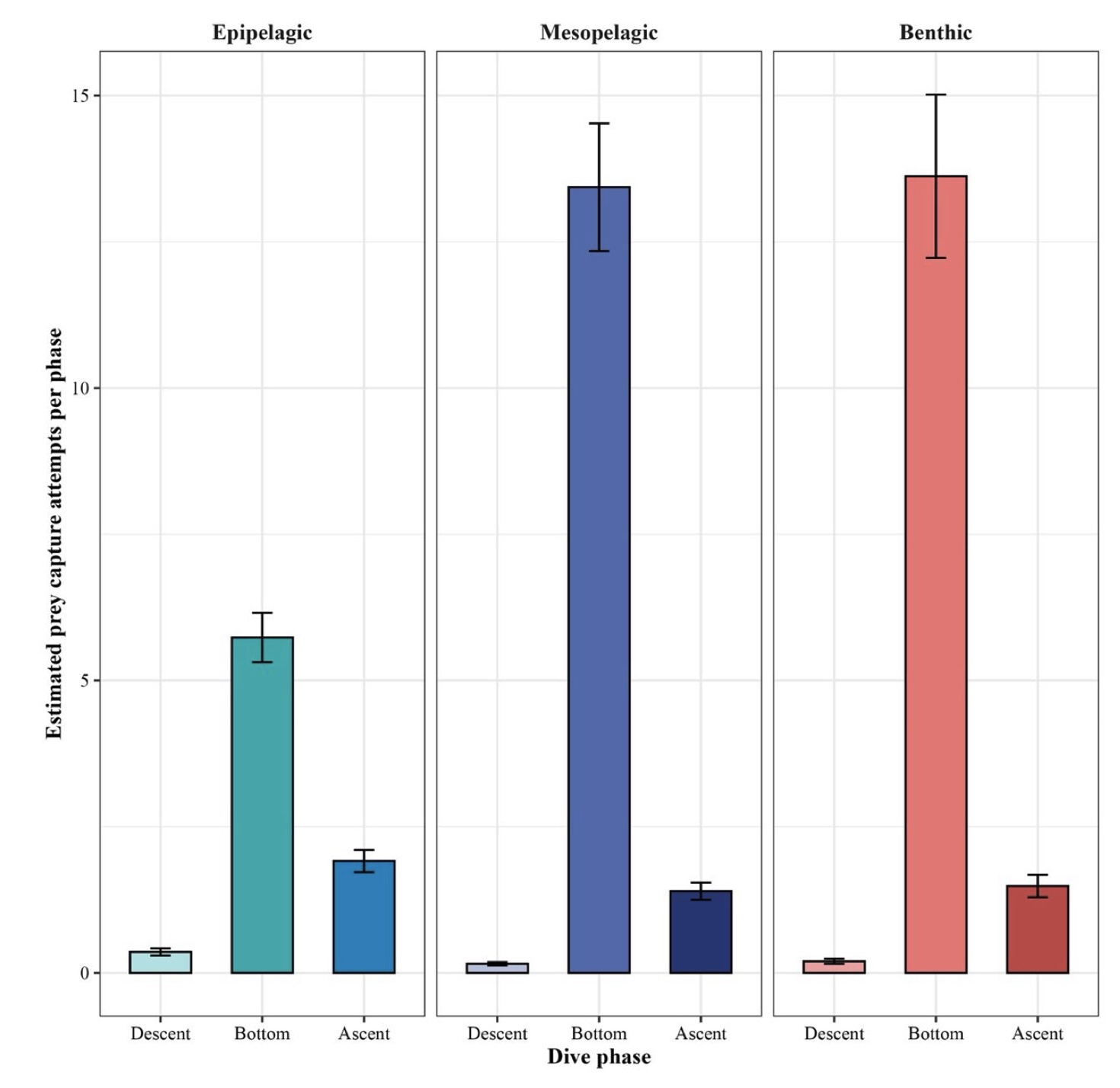
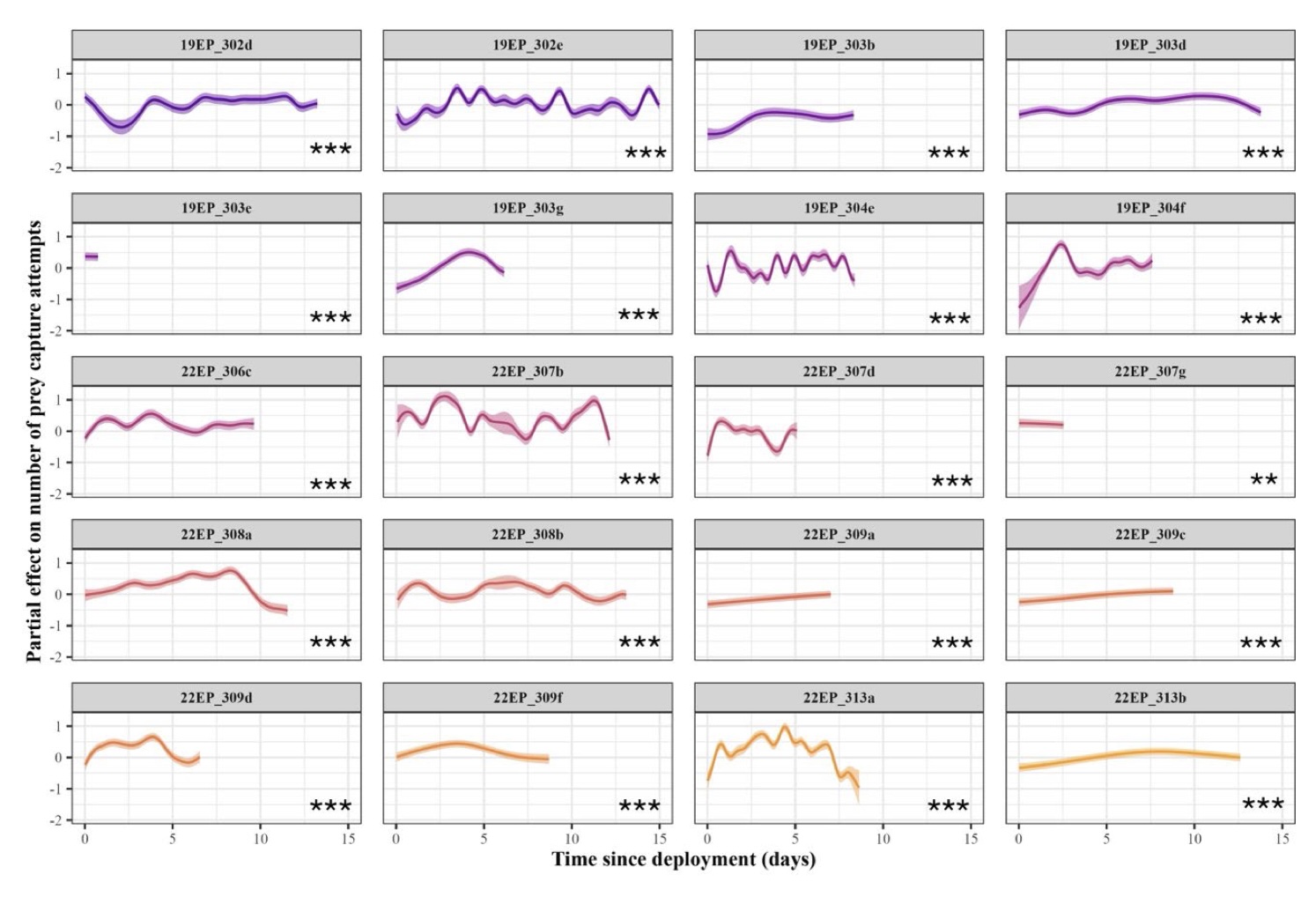
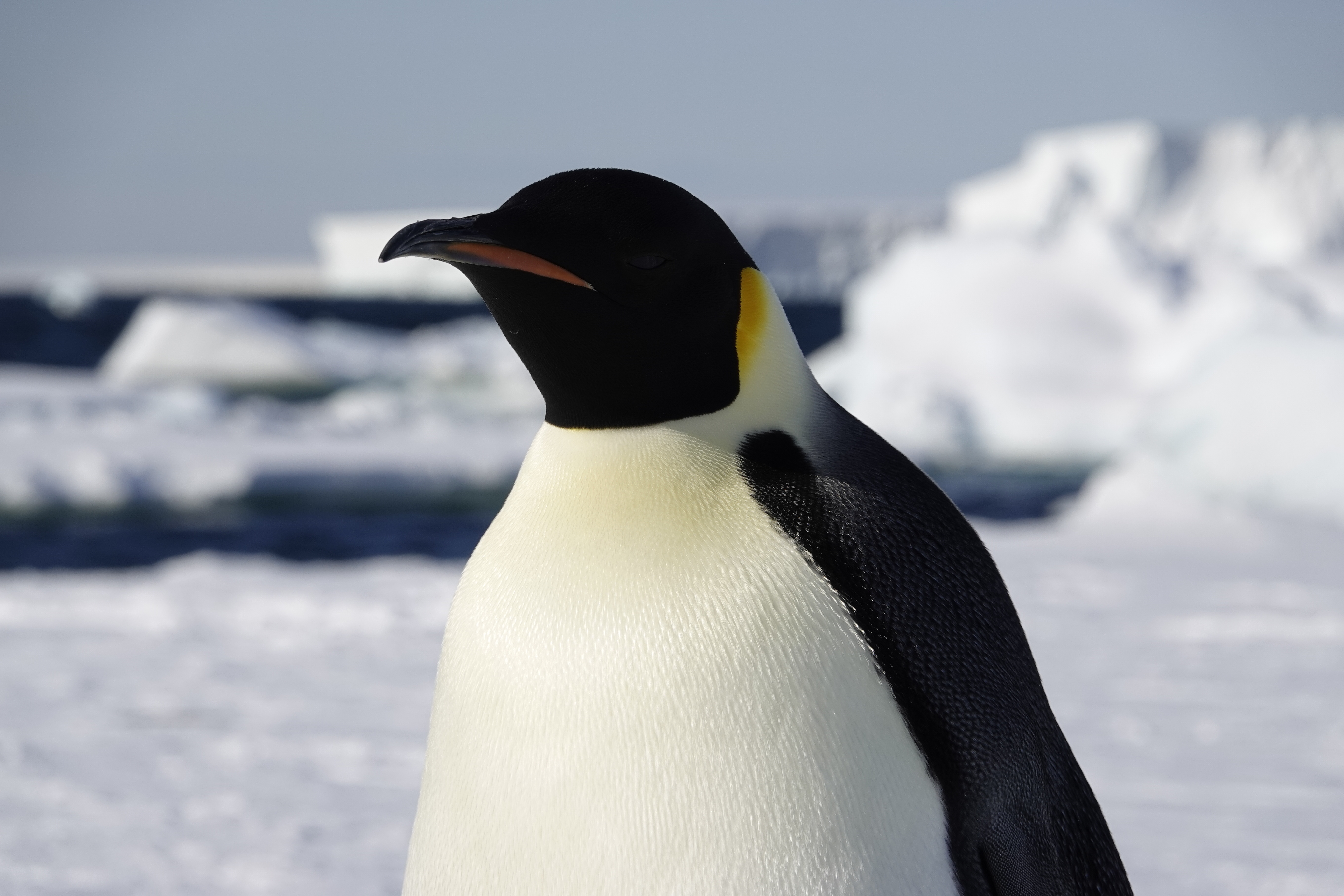
To forage efficiently in patchy and unpredictable prey landscapes, marine predators must optimize energy intake while minimizing costs. Central place foragers like emperor penguins face greater energetic constraints during demanding periods of high investment like chick-rearing. I used high-resolution tri-axial acceleration, depth, and GPS data from 25 birds from two feeding seasons (2019 and 2022) to quantify prey capture attempts and a proxy for energy expenditure (overall dynamic body acceleration; ODBA) across dive types (epipelagic, mesopelagic, benthic), phases (descent, bottom, ascent), and over time at-sea. While prey capture attempts per minute did not differ when looking across dive types alone, the number of attempts was highly phase-dependent, with the highest numbers occurring in the bottom phase of mesopelagic and benthic dives. ODBA increased nonlinearly with prey capture attempts and showed the most complex patterns in shallower, epipelagic dives. Foraging attempts were impacted by short-term behavioral feedback where high numbers of recent attempts and brief surface intervals predicted greater prey capture efforts and higher ODBA in subsequent dives. Significant individual- and trip-level variation further highlight diverse foraging strategies. Together, these findings underscore the flexibility and context- dependent nature of emperor penguin foraging during a critical reproductive period.

Publication figure
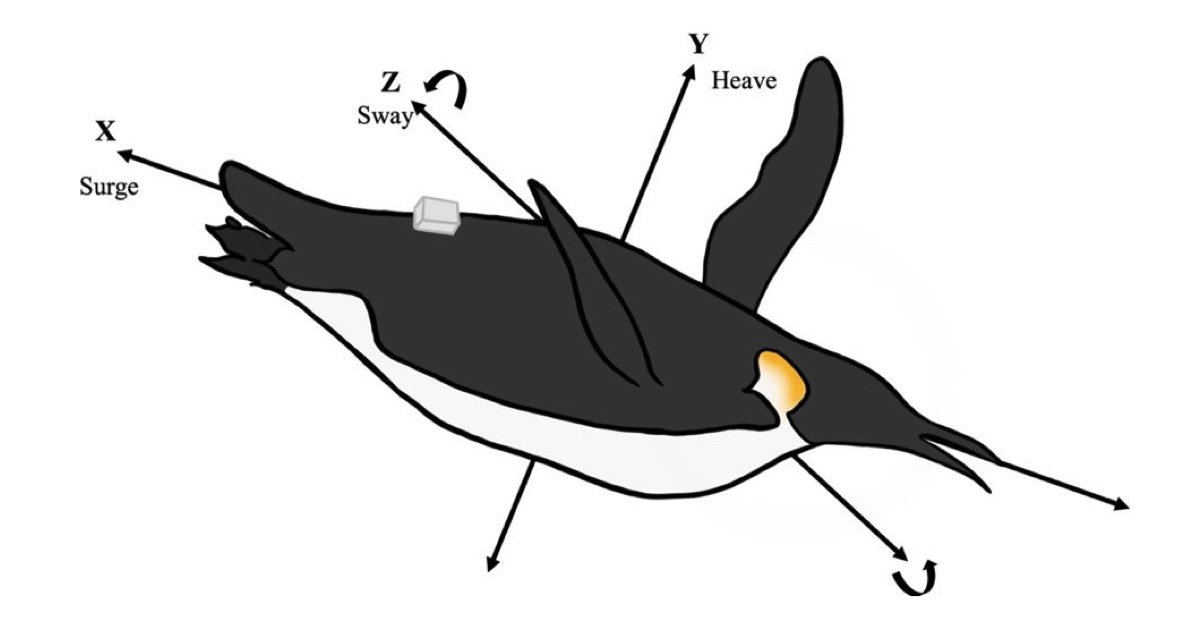
Figure 1. Tag Schematic Depicting the Three Acceleration Axes' - X (Surge), Y (Heave), and Z (Sway)
Publication figure
Figure 6. Estimated Prey Capture Rate per Dive Phase for Each Dive Type, Based on Model-Derived Marginal Means. Bars Represent Mean Prey Capture Rates (on the Response Scale), and Error Bars Indicate 95% Confidence Intervals
Publication figure
Figure 8. Partial Effects of Time Since Deployment (in Days) on Prey Capture Attempts Across Individual Emperor Penguins. Each Panel Shows the Smooth Term for Time Since Deployment from a Generalized Additive Mixed Model Fit Separately for Each Bird (n = 20). Shaded Ribbons Represent 95% Confidence Intervals Around the Smooth Estimates. Asterisks Denote Smooth Terms That Were Statistically Significant (* p < 0.05, ** p < 0.01, *** p < 0.001))

2025

Marine Mammal Watch, collected from the Research Vessel Sikuliaq, Northern Bering Sea to Chukchi Sea, 2025

Taylor R. Azizeh, Sue Moore

Arctic Data Center

The Pacific sector of the Arctic Ocean is experiencing major reductions in seasonal sea ice extent and increases in sea surface temperatures. One of the key uncertainties in this region is how the marine ecosystem will respond to seasonal shifts in the timing of spring sea ice retreat and/or delays in fall sea ice formation. Variations in upper ocean water hydrography, planktonic production and advection, pelagic-benthic coupling and sediment carbon cycling are all influenced by sea ice and temperature change. To more systematically track the broad biological response to sea ice retreat and associated environmental change, an international consortium of scientists have developed a coordinated Distributed Biological Observatory (DBO) that includes selected biological measurements at multiple trophic levels, along with satellite and mooring measurements. The DBO currently focuses on five regional biological “hotspot” locations that allows for consistent sampling and monitoring at biologically productive locations across a latitudinal gradient: DBO 1 (SLIP [St. Lawrence Island Polynya])-south of St. Lawrence Island (SLI), DBO2 (Chirikov)-north of SLI, DBO3 (southern Chukchi Sea), DBO4-NE (northeast) Chukchi Sea, and DBO5-Barrow Canyon. In addition to a suite of biophysical sampling, the DBO also includes seabird surveys and a marine mammal watch along the ship’s track whenever possible, to provide a means to detect responses of these upper-trophic level predators to changes in the Pacific Arctic marine ecosystem.

2021

Publications

Acute and chronic behavioral effects of kelp gull micropredation on southern right whale mother–calf pairs off Península Valdés, Argentina

Taylor R. Azizeh, Kate R. Sprogis, Raquel Soley, Mia LK Nielsen, Marcela M Uhart, Mariano Sironi, Cari Marón, Lars Bejder, PT Madsen, Fredrik Christiansen

Marine Ecology Progress Series , 668 , 113 - 148

Kelp gulls Larus dominicanus (KG) feed on the skin and blubber of living southern right whales Eubalaena australis (SRWs) off Península Valdés (PV), Argentina. The whales respond strongly to KG micropredation by changing their immediate (acute) behavior during attacks and their overall (chronic) surfacing pattern and body posture to minimize gull exposure. The energetic and large-scale behavioral consequences of these attacks are unknown. To address this knowledge gap, we quantified the effect size of both acute (during attacks) and chronic (not during attacks) responses by comparing the respiration rates, swim speed, and nursing behavior of PV SRWs to undisturbed (control) SRW mother-calf pairs in Head of Bight, Australia, using unmanned aerial vehicle focal follows. Even when gulls were not attacking, PV SRW mothers and calves demonstrated ~50 and ~25% higher respiration rates, respectively, than whales in Australia. During attacks, PV calf respiration rates increased by an additional 10%. PV SRW mothers also frequently (>76% of respirations) exhibited irregular breathing postures, causing the whales to potentially expend extra energy by working against their natural buoyancy. Despite no significant increase in average maternal swim speed, 76 and 90% of gull attacks elicited strong behavioral reactions from mothers and calves, respectively. Overall, PV calves spent less time nursing during individual bouts compared to those in Australia but entered suckling position more frequently. Furthermore, kelp gulls seemed to show a preference for attacking previously wounded calves and at a higher rate. These chronic and acute behavioral effects may carry energetic costs, which could have long-term consequences for SRW survival and reproduction.